

What Does Yorba Linda Mean? The History Behind Our City’s Name
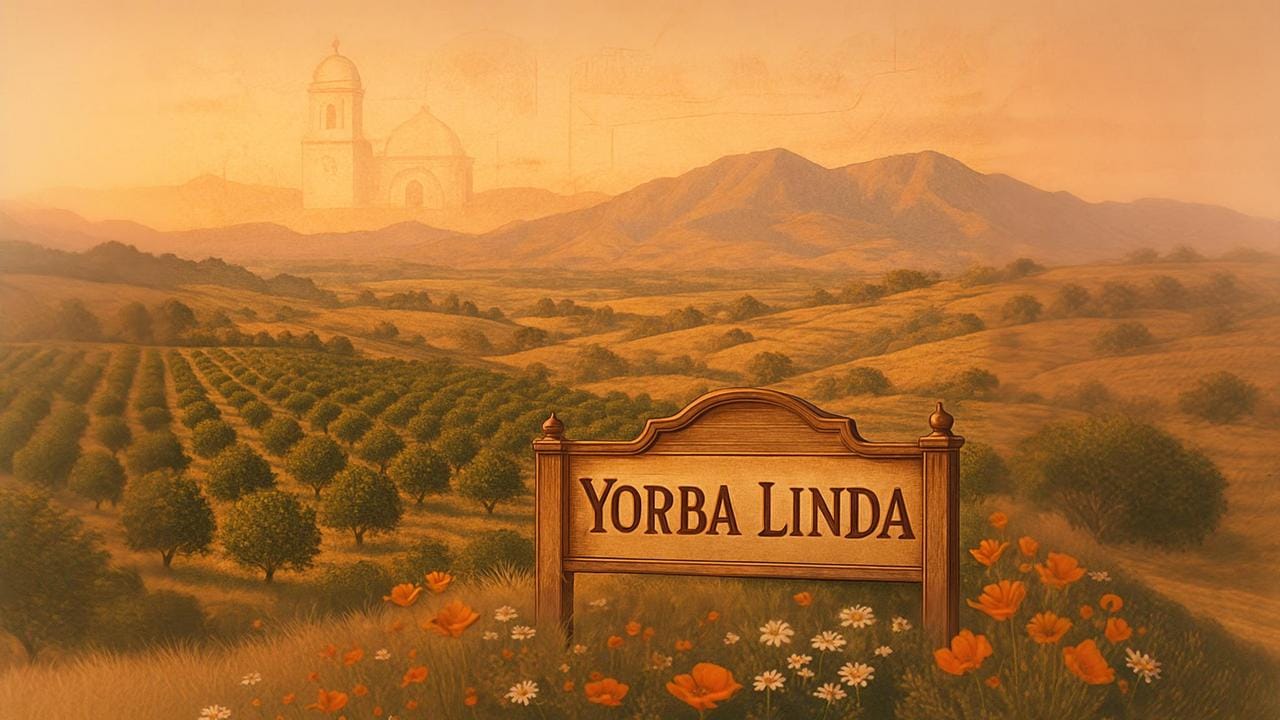
What Does Yorba Linda Mean? The Story Behind the Name of Our Beautiful City
Yorba Linda isn’t just a dot on a map. It’s a city with deep historical roots, a unique cultural identity, and a name that tells a story. If you’ve ever wondered what “Yorba Linda” means, you’re not alone. The answer takes us back hundreds of years to California’s Spanish colonial era.
In this article, we’ll explore the meaning behind the name, the people who inspired it, and how the city grew into the beautiful community it is today.
The Spanish Origins of the Name
The name Yorba Linda comes from two parts:
-
Yorba – A Spanish surname belonging to the influential Yorba family.
-
Linda – A Spanish word meaning “beautiful,” “pretty,” or “lovely.”
Put them together and you get “Beautiful Yorba.” It’s a poetic way of honoring the family while also describing the land they once owned.
In the early 1800s, Spanish and later Mexican land grants significantly influenced the development of what would become California. The Yorba family played a central role in this chapter of history.
The Yorba Family: Early California Settlers
The Yorbas were among the earliest Spanish settlers in California. José Antonio Yorba, a Spanish soldier, arrived in Alta California in the late 1700s as part of the Portolá expedition, which helped establish missions and settlements along the coast.
For his service, José Antonio received a vast land grant from the Spanish crown in 1809 — the Rancho Santiago de Santa Ana. This covered a huge area, including modern-day Anaheim, Orange, Villa Park, and parts of what is now Yorba Linda.
José’s son, Bernardo Yorba, inherited much of this land and expanded the family’s holdings. Bernardo became one of the wealthiest rancheros in California during the Mexican era, known for his generosity and hospitality.
Bernardo Yorba’s Legacy
Bernardo Yorba wasn’t just a landowner; he was a community leader. In 1835, he constructed one of the largest adobe homes in California, featuring over 50 rooms. The home became a hub for social events, religious services, and political gatherings.
Bernardo also provided work for many locals, raised thousands of cattle and sheep, and cultivated large crops. His ranch was a self-sustaining operation that reflected both Spanish and Mexican influences.
When developers began purchasing and subdividing the land in the early 1900s, they chose to honor Bernardo by naming the new community Yorba Linda.
From Ranch Land to Rural Town
Yorba Linda’s transformation began in 1907, when the Janss Investment Company bought 3,200 acres from the Yorba family. They advertised the land as perfect for farming, promoting the fertile soil, clean air, and healthy lifestyle it offered.
Farmers grew citrus, walnuts, avocados, and other orchard crops. The arrival of the Pacific Electric Railway in 1918 connected Yorba Linda to Los Angeles, making it easier to ship produce and commute.
By the 1920s, Yorba Linda had its school, churches, and a post office. Though small, it was a close-knit farming community.
A Turning Point: Post-War Development
For decades, Yorba Linda mainly remained rural. That changed after World War II. Orange County’s population boomed, and Yorba Linda began to suburbanize.
In 1967, Yorba Linda was officially incorporated as a city. Residents worked hard to balance growth with the preservation of open space, parks, and equestrian trails. That vision shaped the city’s layout and remains part of its identity today.
The Meaning of “Linda” in Spanish Culture
While “linda” directly translates to “beautiful,” in Spanish, it’s also an affectionate word. It can mean “lovely,” “sweet,” or “dear.”
When early developers named the community “Yorba Linda,” they weren’t just describing its scenery. They were expressing admiration and affection for the land itself.
Landmarks That Preserve the Name
Yorba Linda’s connection to its history is visible in local landmarks:
-
Yorba Cemetery – One of Orange County’s oldest cemeteries, where members of the Yorba family are buried.
-
Yorba Regional Park – A large park along the Santa Ana River.
-
Bernardo Yorba Middle School – Keeping the founder’s name alive for new generations.
Modern Yorba Linda: A City That Lives Up to Its Name
Today, Yorba Linda is known for:
-
Highly rated public schools
-
Safe, well-kept neighborhoods
-
Miles of equestrian and walking trails
-
The Richard Nixon Presidential Library and Museum
Equestrian culture remains part of daily life. The city still has horse properties and rural pockets, even as it has grown into a thriving suburban community.
Why the Name Matters
Names carry meaning. “Yorba Linda” is more than a pretty phrase—it’s a bridge between the city’s past and present.
It honors one of California’s early families, acknowledges the natural beauty of the land, and expresses pride in the community that has grown here over the last century.
FAQ: The Meaning of Yorba Linda
Q: What does Yorba Linda mean in English?
A: “Beautiful Yorba” — “Yorba” is a Spanish surname, and “Linda” means beautiful in Spanish.
Q: Who was Bernardo Yorba?
A: A 19th-century ranchero whose family once owned much of the land that is now Yorba Linda.
Q: When did Yorba Linda become a city?
A: Yorba Linda was incorporated in 1967.
Q: Is Yorba Linda still connected to agriculture?
A: Most farmland is gone, but the city’s equestrian trails and parks reflect its rural past.
Q: Why is the name important to locals?
A: It honors local history, celebrates the area’s beauty, and strengthens community identity.
Wendy Rawley, award-winning real estate expert serving Anaheim, Brea, Fullerton, Placentia, and surrounding cities – Connect at go2wendy.com