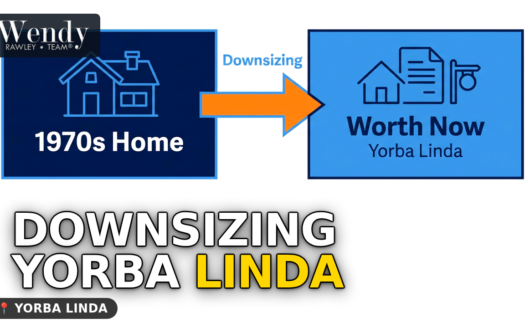

Downsizing in Garden Grove: Where People Actually Move To
Updated October 2026.
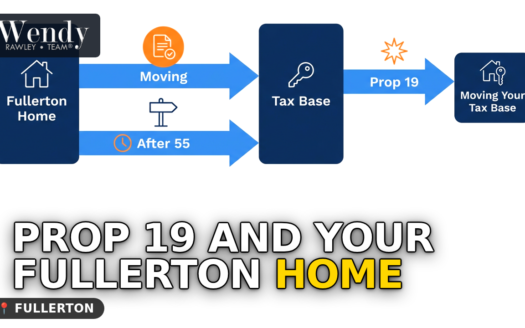
For a Garden Grove owner who wants less upkeep, the practical housing choices to compare are usually a smaller detached house, a townhouse, or a condo, and the main California property-tax tool to evaluate is Proposition 19. If you are 55 or older, Revenue and Taxation Code § 69.6 may let you transfer the assessed-value base of your current principal residence to a replacement principal residence anywhere in California, but only if you file the right claim and meet the statutory conditions.1
The replacement can be anywhere in the state, not just Orange County, and the benefit is never applied for you. You have to claim it with the assessor for the area where the new home sits. Use any online value estimate only to start the conversation; the tax and legal result depends on your filing history, ownership structure, and replacement-property facts.
You have owned your Garden Grove home for a long time, and the reason you are reading this is usually that the house no longer matches what you need day-to-day: fewer stairs, a smaller yard, less to maintain, or a shorter drive to the people you want to see. Downsizing works better when you separate the housing question from the tax question and handle each on its own terms.
Start with two tracks: the replacement-home type you would actually enjoy living in, and the tax review your CPA needs before you rely on a transferred tax base.
- A Proposition 19 base-year value transfer does not occur when you record a deed. You must file a claim with the county assessor in the county where the replacement home is located.1
- For the age-55 path, the form is BOE-19-B, which must be filed within three years of buying or completing the replacement home.1
- Equity is not the same as taxable gain. Owing little or nothing on your home tells you nothing about what, if anything, you would owe at the time of sale. That is a CPA question.
What does the Garden Grove market look like for a move right now?
Garden Grove is moving at a moderate pace. The citywide median sale price is $1,050,000 with homes selling in a median of 33 days, according to Redfin market data for Garden Grove, rolling 3 months ending August 31, 2026.2 Months of supply sits at 2.6, indicating relatively limited inventory while still giving buyers some room to compare options.
Use those citywide numbers for market conditions only, not for pricing your specific home. The all-property median mixes detached houses, townhouses, and condos, so it is not comparable to any one property type. For a downsizer, the more useful comparison is the gap between the detached median and the townhouse or condo median, rather than the actual closed sales that match the homes involved.
For the same rolling 3 months ending August 31, 2026, Redfin puts the detached-house median at $1,097,500, the townhouse median at $710,000, and the condo median at $555,000.2 If you sell a detached home and buy a condo or townhouse, that spread is the practical engine of a downsizing move. It is also where Proposition 19 can matter, because a replacement home worth less than the original is often the cleaner base-year-transfer scenario if the other statutory conditions are met.
About half of Garden Grove sales closed above the asking price, at 49.1%, with a sale-to-list ratio of 100.75%.2 That tells you sellers are getting close to the list, but it says nothing about what your particular street and floor plan will bring. Pricing a specific home takes closed sales inside your tract, which is a direct records pull. We can run those comps for you.
Garden Grove Market Snapshot
Redfin market data for Garden Grove, rolling 3 months ending August 31, 2026, via the Redfin Data Center.
What smaller home options should you consider when downsizing in Garden Grove?
The practical choices to compare are a smaller detached home, a townhouse, or a condo with an association that may handle some exterior responsibilities. The choice usually comes down to how much maintenance you want to hand off, whether stairs are a factor, and whether the exact location works for your daily driving, parking, and walkability needs.
The Redfin property-type data confirms townhouse and condo sales in Garden Grove, but it does not tell you which association is right for your move. Attached and smaller-footprint options can be worth comparing, but treat every community name as a starting point for property-specific review: confirm the exact legal association name, age, current dues, reserves, insurance, litigation, leasing rules, and project-level financing eligibility through escrow, the association, and recorded documents. If you want to stay in Garden Grove but reduce upkeep, compare specific detached listings by lot size, stairs, parking, condition, drive times, and the closed sales around that exact tract rather than relying on a neighborhood name alone.
Some owners may be able to downsize within Garden Grove if the right smaller listing, timing, and tax qualifications line up. If the goal is a smaller house in the same neighborhood, you may be able to move within the city and, if you qualify, carry your property tax base with you under Proposition 19. Others move to a different California county entirely, and that is fine, because the base-year transfer applies to a replacement anywhere in the state.1
When I talk through options with someone, I separate the lifestyle question from the money question on purpose. Where you want to live comes first. The tax mechanics either support that choice or they do not, and that part is for your CPA to confirm, not for a listing agent to promise.
Getting around: walkability and daily-driving fit
Beyond price and maintenance, the exact location shapes the move. Before you commit to a smaller detached home, townhouse, or condo, check how the address works for your daily driving, parking, and walkability needs, and confirm drive times to the people and places you visit most. A smaller home that adds an hour to your week behind the wheel is not the upgrade it looks like on paper, so weigh walkable errands and parking alongside the floor plan.
| Housing type | Garden Grove median | What to weigh |
|---|---|---|
| Detached house | $1,097,500 | Smaller lot may mean less upkeep; check whether an HOA applies and confirm the homeowner’s maintenance responsibilities |
| Townhouse | $710,000 | Shared walls, HOA dues, less yard work |
| Condo | $555,000 | May be single-level; HOA may handle some exterior items; check reserves, master insurance, and CC&Rs |
Property-type medians: Redfin market data for Garden Grove, rolling 3 months ending August 31, 2026.
How does Proposition 19 help if you move to another California home?
Proposition 19 allows a qualifying homeowner to sell a principal residence and transfer its assessed value base to a replacement principal residence located anywhere in California. The governing statute is California Revenue and Taxation Code § 69.6, and it covers people 55 or older, people who are severely and permanently disabled, and victims of a qualifying wildfire or other natural disaster under separate rules.1
These provisions became operative for qualifying replacement transactions on or after April 1, 2021.1 The practical value is that your low Proposition 13 base can follow you instead of resetting to the new home’s market value, which for a longtime owner is often a meaningful difference in the annual property-tax bill.
Several conditions apply. The State Board of Equalization states the original property must generally be your principal residence, the replacement must become your principal residence, and both the sale and the purchase or new construction must happen within the applicable two-year period.1 If the replacement is worth more than the original, the excess can increase the transferred value rather than defeating the transfer outright.
A claimant who qualifies by age or disability may use the transfer for up to three qualifying transactions.1 The base-year transfer takes effect on the later of the date the original home is sold or the date the replacement is purchased or newly constructed.3 That review should happen before you accept an offer if your replacement purchase depends on keeping a low assessed value.
- Age 55 or older files BOE-19-B within three years of buying the replacement home or completing its new construction.1
- Severely and permanently disabled claimants file BOE-19-D and BOE-19-DC on the same three-year timeline.1
- A claim filed after the three-year window may still be accepted, but the BOE states the transfer then generally begins with the year the claim is filed rather than retroactively.4
What is the Orange County filing process if the new home is here?
If your replacement home is in Orange County, you file the Proposition 19 claim with the Orange County Assessor, not with the City of Garden Grove. The BOE is explicit that base-year-transfer claim forms are obtained from and filed with the assessor of the county where the replacement property sits.1
The general sequence is to complete the applicable claim form, provide the transaction and residency information it requests, file it with the correct county assessor, and separately file any related homeowners’ exemption claim within its own deadline.5 The Orange County Assessor publishes its real-property and Proposition 19 materials, and because county intake procedures can change, confirm the current submission method and address with that office directly.
One point I make sure people hear: recording a deed with the county does not, by itself, trigger a property-tax exclusion. Recording proves the conveyance happened. The property-tax benefit still requires a filed claim, and the assessor determines eligibility and may request documentation.1
What is your Garden Grove home actually worth?
Get a free, instant estimate of your Garden Grove home value and equity. No obligation. An instant estimate is a starting point, not an appraisal or a guaranteed sale price.
Get your home valueWhat if you want to pass the Garden Grove home to a child instead of selling?
If the plan is to move property to a child or grandchild rather than sell on the open market, a different set of rules applies. Revenue and Taxation Code § 63.2, which implements Proposition 19, governs intergenerational transfer exclusions for qualifying transfers occurring on or after February 16, 2021.6
Under the current rules, a qualifying parent-to-child transfer may preserve the parent’s Proposition 13 taxable value only if the statutory conditions are met, with the principal residence treated differently from other property.6 For a grandparent-to-grandchild transfer, the Orange County Assessor states the grandchild’s parents generally must be deceased for the grandchild to qualify.7
The relevant forms are BOE-19-P for a parent-child transfer and BOE-19-G for a grandparent-grandchild transfer, generally filed within three years of the transfer date and before the property passes to a third party if the claimant seeks the exclusion.6 The transferee must also claim the homeowners’ or disabled veterans’ exemption within one year of the transfer to satisfy the applicable Proposition 19 requirement.7
None of this is automatic. If no eligible heir qualifies and files, reassessment may substantially increase the assessed value, which is precisely why a California property-tax attorney and your CPA should review a transfer before title moves. Before title moves, get written guidance on whether the transfer, exemption claim, and ownership structure all point to the same result.
What should a CPA or attorney confirm before you close?
The assessor decides the property-tax exclusion; your CPA and attorney still need to review income tax, gift tax, estate tax, basis, title, and trust issues before the transaction is locked in. For planning, put the assessor claim, income-tax exposure, and title structure on the same timeline so one issue does not surprise the others.
Among the items worth confirming is whether the Garden Grove home qualifies as your principal residence, the exact sale and purchase dates against the two-year timing rule, whether you have already used any Proposition 19 age-55 transfer, how the replacement value compares to your adjusted base-year value, and whether title held in a trust, LLC, or partnership changes anything.1 Any gift, estate, capital-gains or basis consequence is a question for your CPA, and any HOA approval or transfer restriction should be read in the governing documents before you commit.
On the money side, remember the equity-versus-gain distinction. Your equity is market value minus what you owe. Any taxable gain is the amount realized minus your adjusted basis, then reduced by any exclusion you qualify for. Those are different numbers, and only your CPA can tell you where you land. A licensed mortgage loan originator should handle any financing on the replacement home, including whether Orange County’s high-cost conforming loan limit of $1,249,125 is relevant to your situation.8
Where to Start
- Decide the lifestyle first: smaller detached home, townhouse, or single-level condo, in Garden Grove or elsewhere in California.
- Ask about Proposition 19 early: if you are 55 or older, confirm with your CPA whether a base-year transfer under § 69.6 fits your timeline before you list.
- Price on tract comps, not the citywide median: the blended $1,050,000 figure mixes property types and is not your home’s value.
- Make sure every required claim is filed: The appropriate Proposition 19 forms must be submitted to the correct county assessor within the applicable deadlines. Recording a deed does not automatically complete the process.
- Keep your professionals separate: the assessor handles property tax, your CPA handles income and gift tax, a real estate attorney handles title and trust questions.
Common questions about downsizing in Garden Grove
Can I keep my low property-tax base if I downsize within Garden Grove?
You may be able to, if you qualify under Proposition 19. California Revenue and Taxation Code § 69.6 allows a homeowner who is 55 or older, severely and permanently disabled, or a qualifying disaster victim to transfer the assessed-value base of a principal residence to a replacement principal residence anywhere in California, including within Garden Grove, provided the statutory conditions and filing deadlines are met. Confirm your eligibility with your CPA before you list.
Does the Proposition 19 benefit apply automatically when I buy the new home?
No. The base-year transfer is never automatic. You must file the applicable claim, such as BOE-19-B for the age-55 path, with the county assessor where the replacement property is located, generally within three years of buying or completing the replacement home. Recording a deed does not, by itself, trigger the exclusion.
What does a smaller home typically cost in Garden Grove?
For the rolling 3 months ending August 31, 2026, Redfin market data for Garden Grove puts the condo median at $555,000, the townhouse median at $710,000, and the detached-house median at $1,097,500. These are citywide property-type medians, not a value for any specific home. Pricing your own home or a target purchase requires closed sales inside the relevant tract.
Is my home equity the same as taxable gain when I sell?
No. Equity is your home’s market value minus what you still owe on it. Taxable gain is the amount realized at sale minus your adjusted basis, then reduced by any exclusion you qualify for. An owner with a paid-off home has full equity and may still owe no tax at all. Your CPA should run the actual numbers for your situation.
Where do I file if my replacement home is in Orange County?
You file the Proposition 19 claim with the Orange County Assessor, not with the City of Garden Grove. The claim form is obtained from and filed with the assessor of the county where the replacement property sits. Confirm the current submission method and intake address with that office, since county procedures can change.
What if I want to pass the home to my child instead of selling?
Intergenerational transfer rules under Revenue and Taxation Code § 63.2, which implements Proposition 19 for transfers on or after February 16, 2021, may let a qualifying parent-to-child transfer preserve the parent’s taxable value, but only if the conditions are met and the BOE-19-P claim is filed, generally within three years of the transfer. A grandparent-to-grandchild transfer under BOE-19-G generally requires the grandchild’s parents to be deceased. Review any transfer with a real estate attorney and your CPA first.
Thinking about a smaller home in Garden Grove?
Buying here? Wendy can help you compare available condos, townhouses, and smaller detached homes against the maintenance, parking, stairs, and budget issues that matter most. Already own a Garden Grove home? Wendy can estimate your resale range from tract-level comps rather than a citywide average, and point you to the right professionals for the tax side.
Call (714) 746-6355 Contact WendyFor more on the local market, see our Garden Grove home page. Commissions are negotiable, and we are glad to explain how that works for your sale.

Wendy Rawley
REALTOR® | DRE #01898824
Wendy helps longtime Garden Grove owners sell and move into a smaller home that fits, coordinating comps, timing, and the right CPA or attorney referrals. Reach The Wendy Rawley Team at First Team Real Estate at (714) 746-6355.
Over more than a decade in Southern California real estate, the Wendy Rawley Team has represented 171 home sellers and 102 buyers.9 These figures reflect prior closed transactions and do not guarantee future results.
Sources
1 California State Board of Equalization, Proposition 19
State guidance on the base-year-value transfer, qualifications, forms, and the requirement that claims be filed with the county assessor where the replacement property is located.
2 Redfin Data Center
Source of the Garden Grove market figures used here, rolling 3 months ending August 31, 2026, including the all-property median and the detached, townhouse, and condo property-type medians, held in our own maintained dataset.
3 California State Board of Equalization, Letter to Assessors 2021/019
States that the base-year transfer takes effect on the later of the sale of the original residence or the purchase or completion of the replacement.
4 California State Board of Equalization, Publication 800-3
Explains the three-year filing window and the limited retroactive treatment of late Proposition 19 transfer claims.
5 California State Board of Equalization, Introduction to Proposition 19
Overview of the claim process and the related homeowners’ exemption filing step.
6 California State Board of Equalization, Publication 801
Covers the Proposition 19 intergenerational transfer exclusion under R&T § 63.2, forms BOE-19-P and BOE-19-G, and the three-year filing deadline.
7 Orange County Assessor, Transfer of Property Among Family Members
County guidance on parent-child and grandparent-grandchild transfers, including the exemption filing requirement and the intervening-parent rule.
8 FHFA, Conforming Loan Limit Values
Source of the Orange County high-cost conforming loan limit cited; a licensed mortgage loan originator should confirm its relevance to your financing.
9 California Regional Multiple Listing Service (CRMLS)
CRMLS closed-transaction records are the source of the Wendy Rawley Team’s stated counts of 171 sellers and 102 buyers represented. Prior closed transactions do not guarantee future results.
This article is general information for Garden Grove homeowners and is not legal, tax, or financial advice. Proposition 19 and intergenerational transfer rules carry statutory conditions and deadlines that depend on your specific facts; confirm your situation with a real estate attorney and your CPA, and direct financing questions to a licensed mortgage loan originator. No outcome is promised or guaranteed.
Market figures are Redfin market data for Garden Grove, rolling 3 months ending August 31, 2026, via the Redfin Data Center, and describe citywide conditions and citywide property-type medians, not the value of any individual home. Commissions are negotiable.
The Wendy Rawley Team at First Team Real Estate, DRE #01898824, (714) 746-6355. Equal Housing Opportunity.